Anthares OS ♥
Independent Linux distribution based on Debian 13 with customized Cinnamon. Minimalist, GUI-first, with an epic theme inspired by Antares/Scorpius and the Élise virtual assistant.
Why Anthares OS?
A complete ecosystem for users who want simplicity, privacy, and usability without a mandatory terminal. Built by a solo developer since 2018 with persistence and care.
Theme
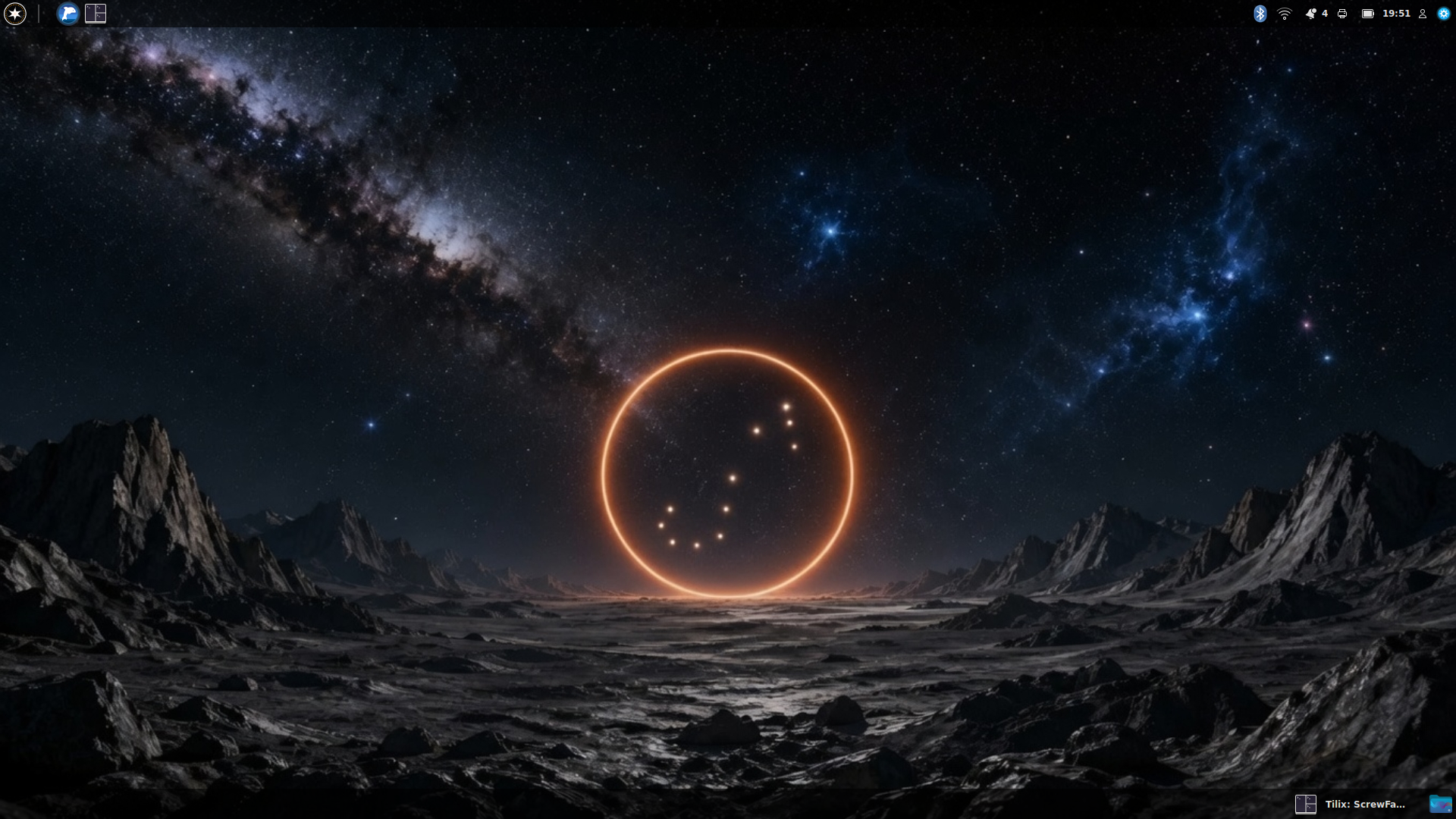
Dark interface with orange accents — minimal and modern. The desktop evokes a space setting: starry background, Milky Way atmosphere, and identity inspired by the Scorpius constellation and Antares.
Deepside Dock
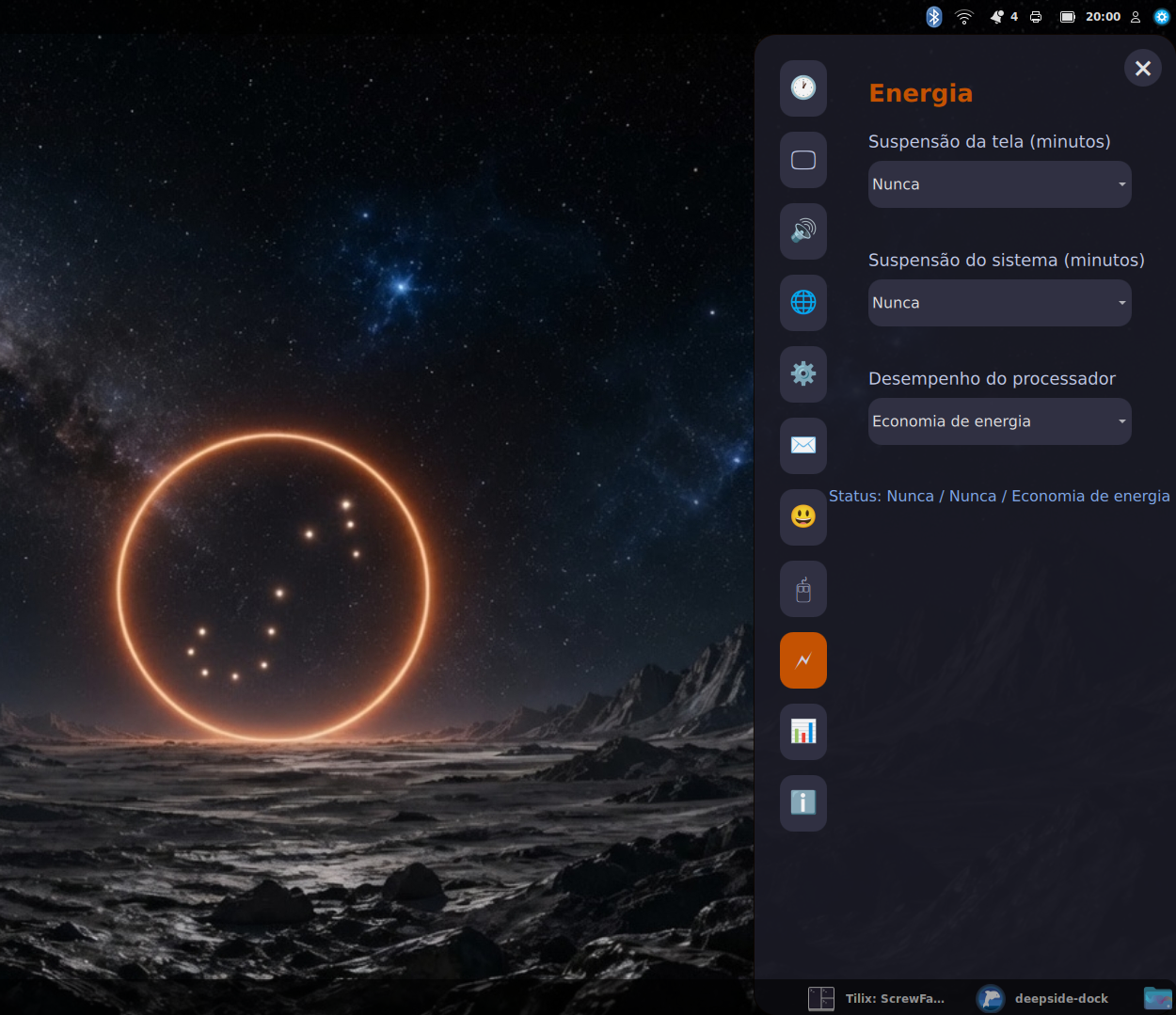
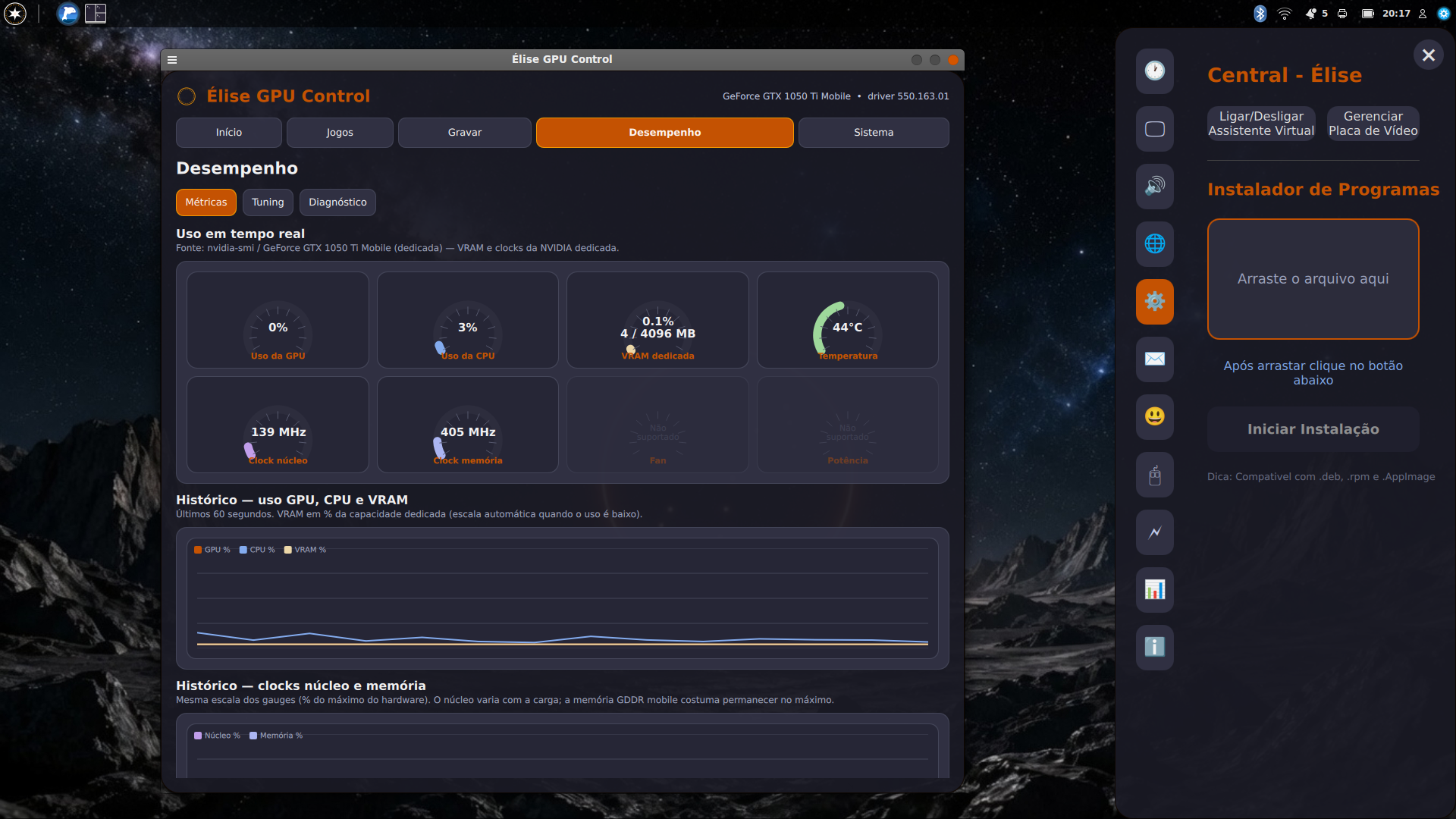
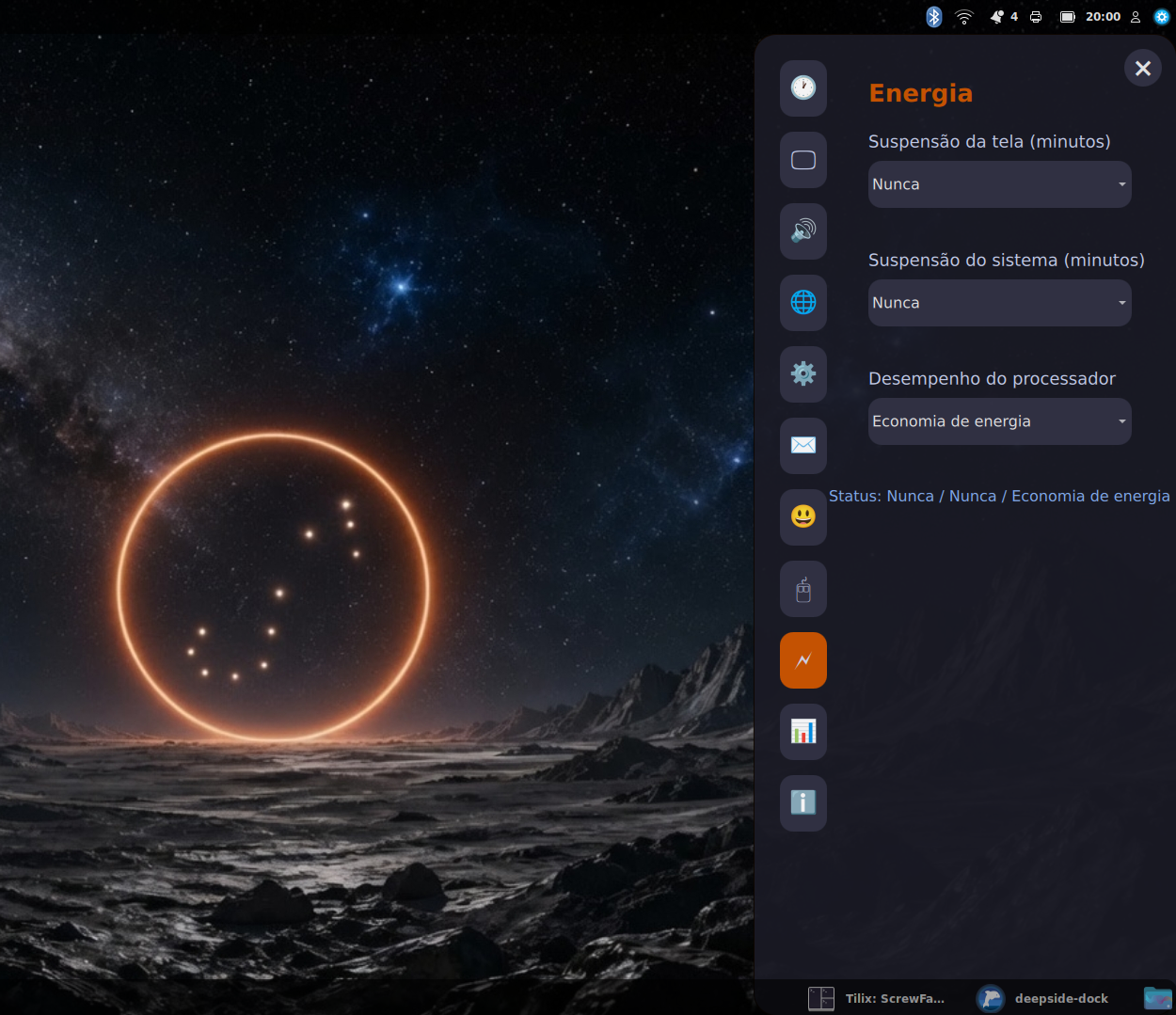
Intuitive side dock with quick settings: Wi-Fi, integrated Telegram, power, hardware info, and more.
Élise Assistant
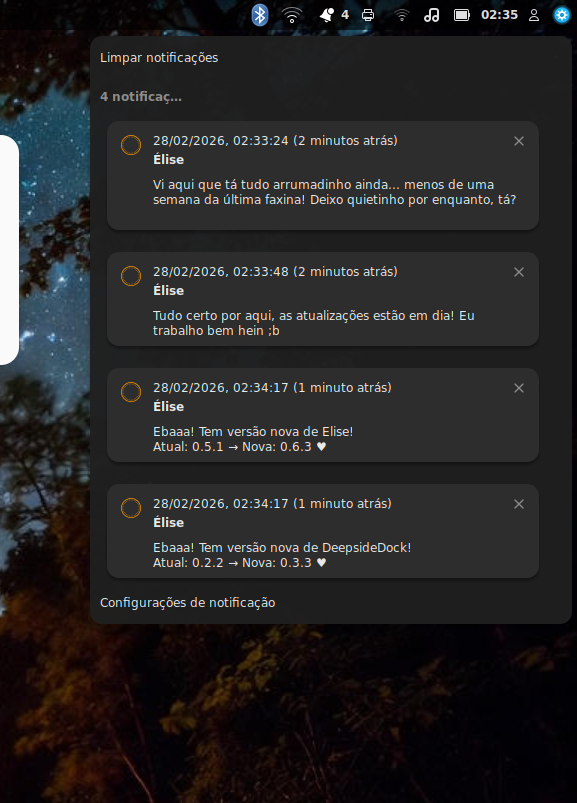
Proactive and transparent: file organization, basic firewall, updates, “Good morning”, and privacy monitoring.
Launchpad X
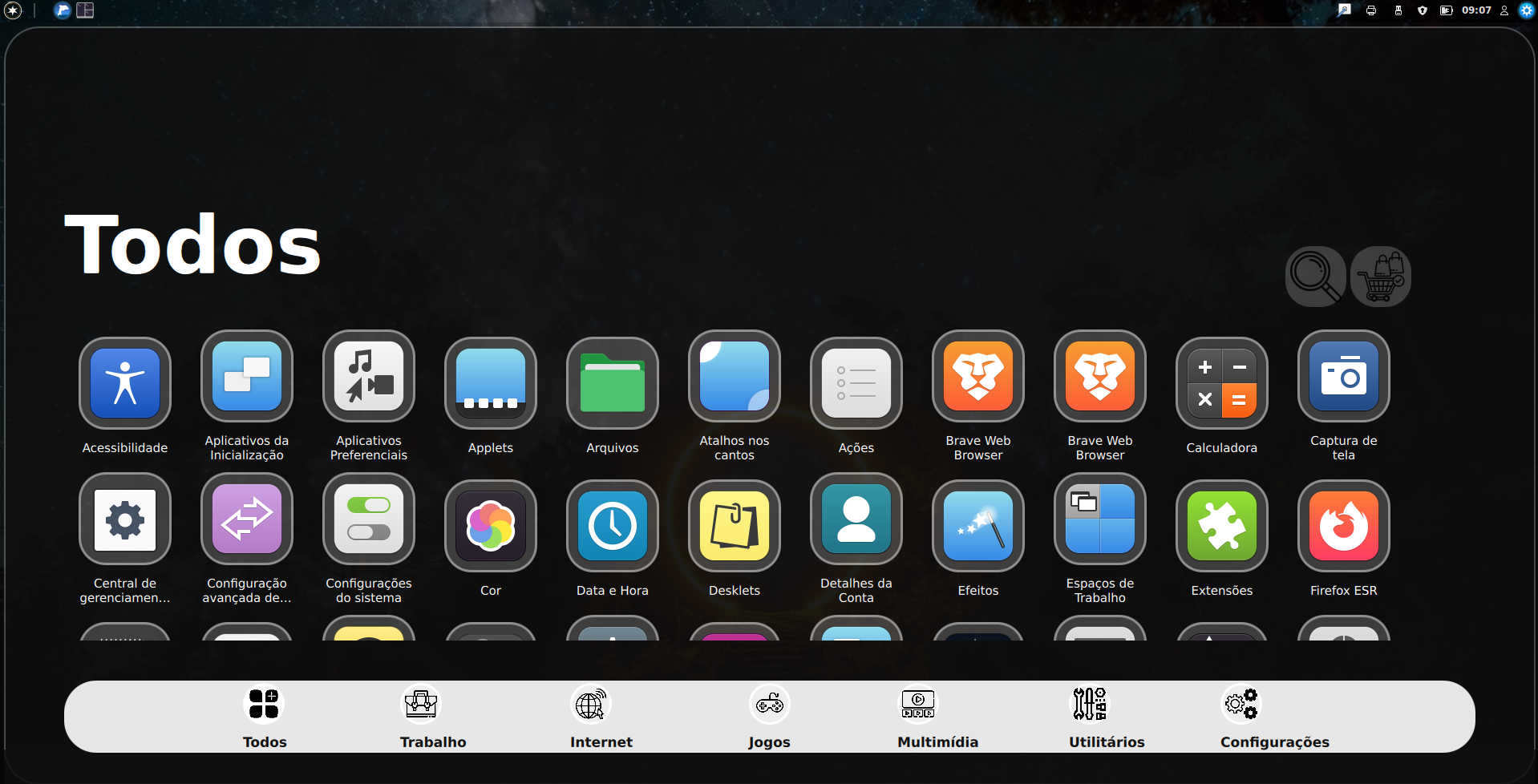
Android-style menu: large icons, categories, and fast search to find apps in seconds.
Starting Point
Pick apps on first boot for a lightweight system from day one — only what you actually use.
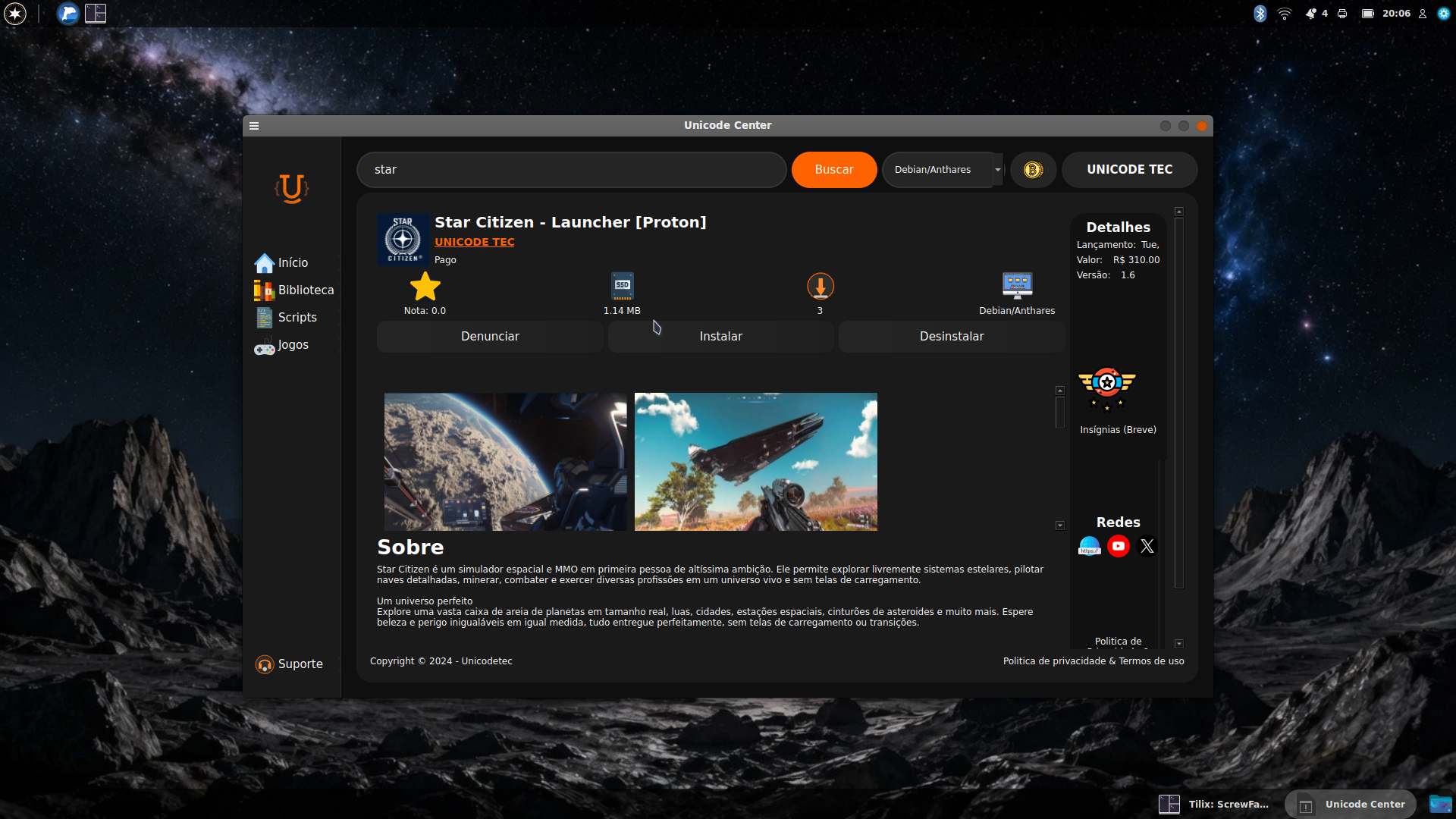
Unicode Center
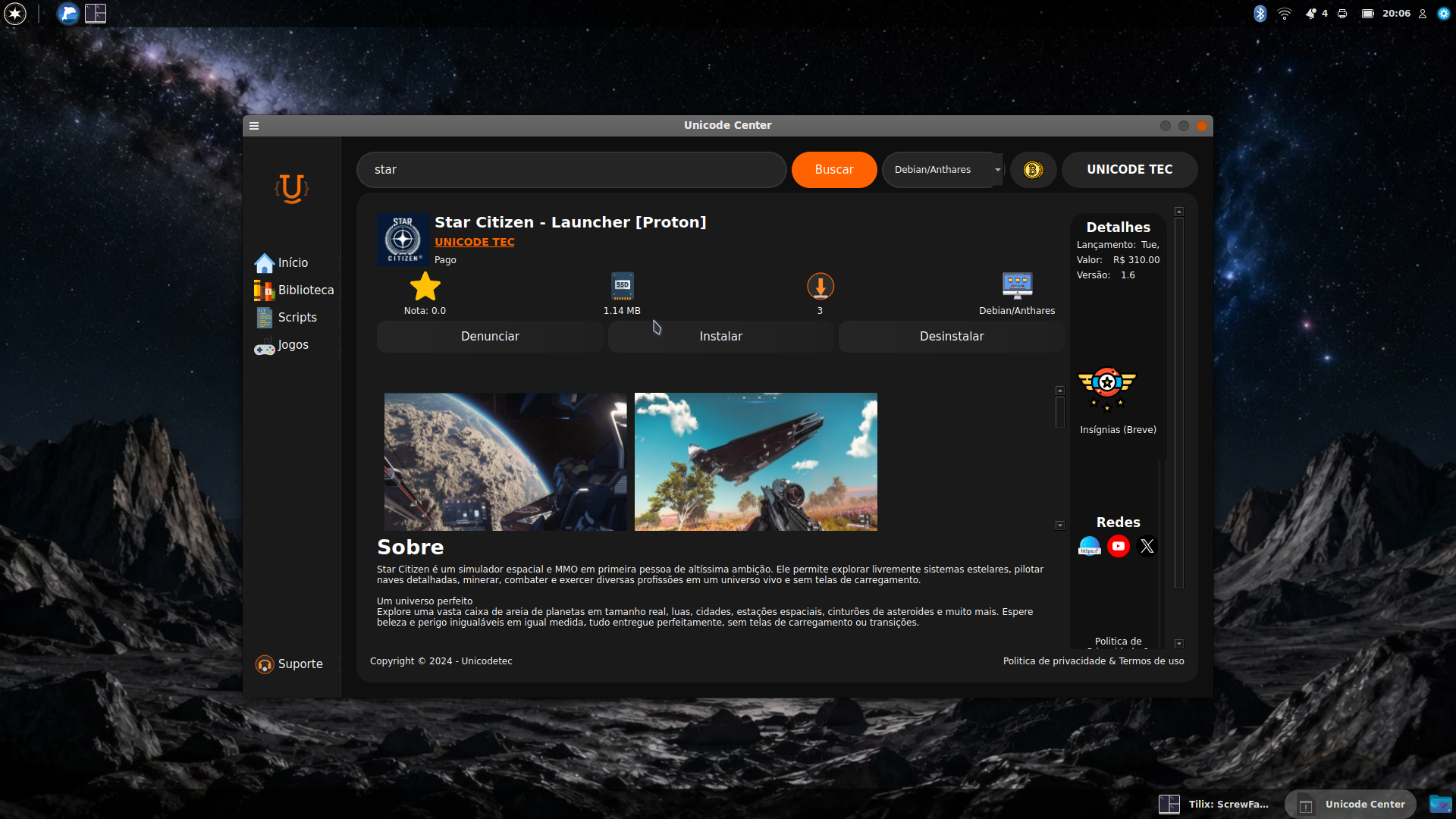
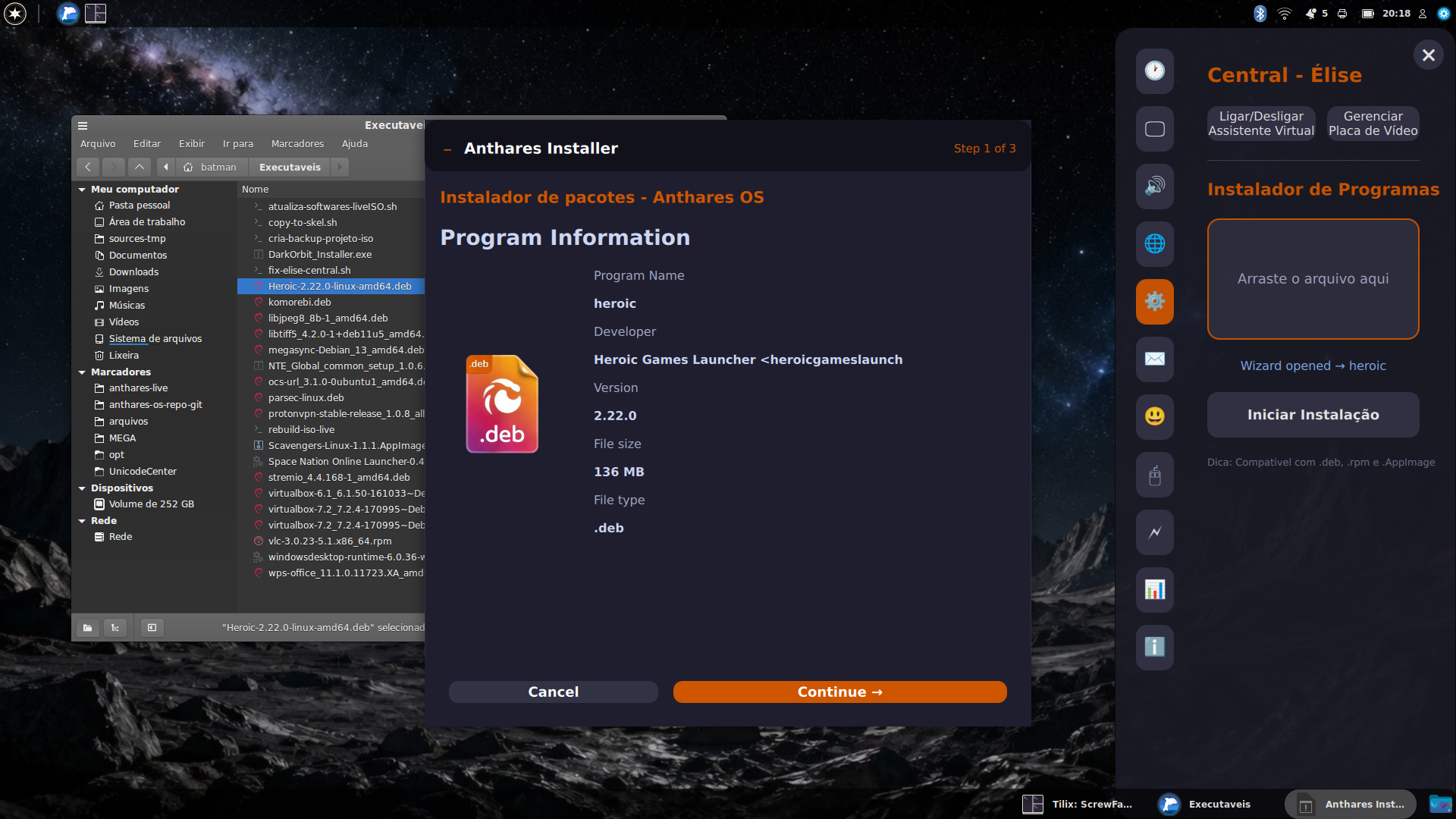
Play Store–like app shop prototype with one-click install and 150+ planned apps.
Explore the ecosystem of Anthares OS.
Community
Join, ask questions, and follow Anthares OS development.
Support the Project
Donations help with servers, domain, and ongoing development.
Bitcoin (BTC)
bc1ptgktktv6kce5xhc4lkyex60s8xguyy0wjd58grxh8ve990qrpzmq2j88rk
Solana
GmYbs4CK1Nv3LkkYzqQQqwuYBdeTD8aa7CppXxBkWF9c
Ethereum
0x29Ea0f6c4c29658FF9df72cd42A2e248f9bbf38D
Frequently
asked questions
This is not a simple question to answer, because the project has many objectives and functionalities. Perhaps the best starting point is to consult the documentation available on the website, where there is a summary of the proposal for each part of the project.
In an overview, the main element is the operating system itself. The project will have two distinct bases: the current version, based on Debian, and, in the future, a version based on LFS (Linux From Scratch) and BLFS (Beyond Linux From Scratch).
It is correct to state that the current version is a Debian-derived distribution, in the same way that Linux Mint is an Ubuntu-derived distribution, but with its own characteristics, adjustments, and functionalities.
Another important point is that the project was conceived to eliminate the need to use the terminal for day-to-day tasks. The focus is mainly to serve users who are migrating from Windows and have little experience with computers. From installing programs to fixing system errors and problems, all operations will be performed through graphical interfaces. Whenever a solution is available only through the terminal, a graphical interface will be developed so that the user can use it in a simple and intuitive way.
The app store will follow a model similar to that of current app stores. This means that it will not be exclusively the project team that determines which programs will be available. Developers will be able to publish their own projects for distribution to the community. In addition, the platform will include features such as donation mechanisms for other Linux distributions, optional support for payments and receiving funds using cryptocurrencies, among other functionalities described in more detail in the project Wiki.
The main differentiator of the operating system is Élise, the virtual assistant responsible for intelligent management of the system. Her function will be to administer the operating system and keep the user informed whenever an important situation occurs that deserves attention.
However, it is important to highlight that Élise is still in a very early stage of development. Currently, she has less than 5% of the planned functionalities. As her goal is to interact at a low level with components such as hardware and the operating system kernel, her development requires complex studies and implementations that are still in progress. For this reason, the current version should not be considered a complete prototype, but rather an initial concept of the proposal.
To better illustrate how she works, imagine Élise as a computer technician integrated into the operating system itself.
She will be able to alert about problems found in the repositories, perform automatic checks looking for internal system errors, and, when she identifies a failure, inform the user and request authorization before executing the fix.
She will also be responsible for automatically administering the firewall, opening or removing port permissions according to the programs installed. Likewise, she may enable or disable kernel modules according to the hardware present on the computer, as well as perform various other adjustments so that the system is adapted specifically to the characteristics of each machine.
Élise will also automatically identify the computer usage context. When detecting the execution of a game, for example, she will perform optimizations to make the maximum possible hardware resources available to the application. Likewise, she will apply specific configurations when the user is working or using the computer in everyday activities. Various adjustments that currently depend on technical knowledge and use of the terminal will be performed automatically as each situation requires.
As an example, if the system has a failure that prevents the graphical interface from loading, Élise may identify the problem, execute the necessary repair procedures, and automatically restore the operation of the interface.
The proposal is that the operating system be able to adapt to each user's profile. As needs vary from one person to another, the system optimized for a given user may be different from the one used by another person. Élise will be responsible for continuously adjusting the system's own base according to each user's profile, usage habits, and specific needs.
This is precisely one of the reasons why a version based on LFS is planned for the future. It will offer a much greater level of control over the structure of the operating system, making administration by Élise easier and allowing an even deeper degree of personalization.
Build with us
Open source under GPLv3. Issues and pull requests are welcome on GitLab. Contact: unicodetec@gmail.com